Welcome to DU!
The truly grassroots left-of-center political community where regular people, not algorithms, drive the discussions and set the standards.
Join the community:
Create a free account
Support DU (and get rid of ads!):
Become a Star Member
Latest Breaking News
Editorials & Other Articles
General Discussion
The DU Lounge
All Forums
Issue Forums
Culture Forums
Alliance Forums
Region Forums
Support Forums
Help & Search
American History
Related: About this forum
On May 14, 1945, house painter Albert Stevens was injected with the highest known accumulated radiation dose in a human.
depths of wikipedia
@depthsofwikipedia.bsky.social
On this day in 1945 Albert Stevens became the "most radioactive human ever" when doctors injected him with 131 kBq of plutonium as an experiment (much more than the lethal dose!), believing he had terminal cancer and "was doomed" to die. Then he shocked everyone by living another 21 years
7:00 PM · May 14, 2026
@depthsofwikipedia.bsky.social
On this day in 1945 Albert Stevens became the "most radioactive human ever" when doctors injected him with 131 kBq of plutonium as an experiment (much more than the lethal dose!), believing he had terminal cancer and "was doomed" to die. Then he shocked everyone by living another 21 years
7:00 PM · May 14, 2026
On this day in 1945 Albert Stevens became the "most radioactive human ever" when doctors injected him with 131 kBq of plutonium as an experiment (much more than the lethal dose!), believing he had terminal cancer and "was doomed" to die. Then he shocked everyone by living another 21 years
— depths of wikipedia (@depthsofwikipedia.bsky.social) 2026-05-14T23:00:13.156Z
Albert Stevens
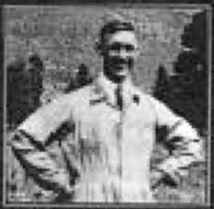
Albert Stevens
Born: 1887
Died: January 9, 1966 (aged 78–79)
Resting place: Cremains in storage at Argonne National Laboratory and Washington State University
Occupation: House painter
Known for: Surviving the highest known radiation dose in any human
Albert Stevens (1887–1966), also known as patient CAL-1, was an American house painter from Ohio who was subjected to an involuntary human radiation experiment and survived the highest known accumulated radiation dose in any human. On May 14, 1945, he was injected with 131 kBq (3.55 μCi) of plutonium without his knowledge because it was erroneously believed that he had a terminal disease.
Plutonium remained present in his body for the remainder of his life, the amount decaying slowly through radioactive decay and biological elimination. Stevens died of heart disease some 20 years later, having accumulated an effective radiation dose of 64 Sv (6400 rem) over that period, i.e. an average of 3 Sv per year or 350 μSv/h. The current annual permitted dose for a radiation worker in the United States is 0.05 Sv (or 5 rem), i.e. an average of 5.7 μSv/h.
{snip}
Manhattan Project
{snip}
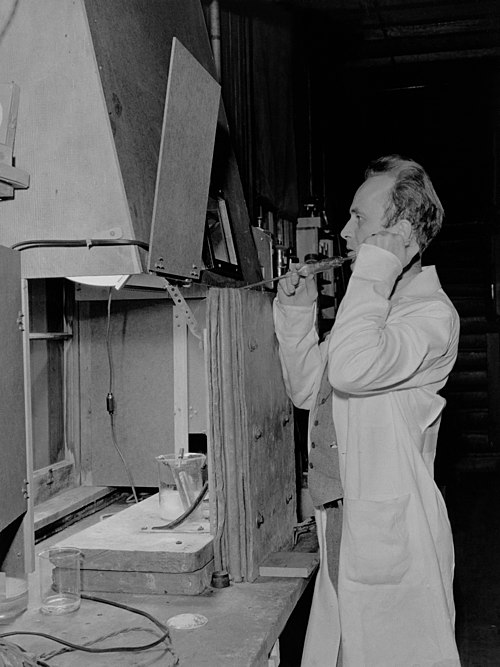
Joseph G. Hamilton was the primary researcher for the human plutonium experiments done at U.C. San Francisco from 1944 to 1947. Hamilton wrote a memo in 1950 discouraging further human experiments because the AEC would be left open "to considerable criticism", since the experiments as proposed had "a little of the Buchenwald touch."
Behind this human experiment with plutonium was Dr. Joseph Gilbert Hamilton, a Manhattan Project doctor in charge of the human experiments in California. Hamilton had been experimenting on people (including himself) since the 1930s at Berkeley. He was working with other Manhattan Project doctors to perform toxicity studies on plutonium. It was Hamilton who had begun the 1944 tracer experiments on rats. The opportunity to select a human patient was relatively easy: Hamilton was not only a physicist assigned to U.C. Berkeley, he was "professor of experimental medicine and radiology" at U.C. San Francisco." Hamilton eventually succumbed to the radiation that he explored for most of his adult life: he died of leukemia at the age of 49.
Although Stevens was the person who received the highest dose of radiation during the plutonium experiments, he was neither the first nor the last subject to be studied. Eighteen people aged 4 to 69 were injected with plutonium. Subjects who were chosen for the experiment had been diagnosed, sometimes falsely, with a terminal disease. They lived from six days up to 44 years past the time of their injection. Eight of the 18 died within two years of the injection. All were logged as having presumably died from their respective preexisting terminal or cardiac illnesses. None died from the plutonium alone. Patients from Rochester, Chicago, and Oak Ridge were also injected with plutonium in the Manhattan Project human experiments.
As with all radiological testing during World War II, it would have been difficult to receive informed consent for Pu injection studies on civilians. Within the Manhattan Project, plutonium was referred to often by its code designation "49" (from its atomic number 94 and its atomic mass 239) or simply the "product". Few outside of the Manhattan Project would have known of plutonium, much less of the dangers of radioactive isotopes inside the body. There is no evidence that Stevens had any idea that he was the subject of a secret government experiment in which he would be subjected to a substance that would have no benefit to his health.
Experiment on Stevens
Stevens was a house painter, originally from Ohio, who had settled in California in the 1920s with his wife. He had checked into the University of California Hospital in San Francisco with a gastric ulcer that was misdiagnosed as terminal cancer. According to Earl Miller, acting chief of radiology at the time, he was chosen for this study because "he was doomed" to die.
Stevens was injected with a mixture of plutonium isotopes having the Pu(VI) chemical species (Pu6+) as the nitrate PuO2(NO3)2. The injection consisted of 0.2 micrograms of 238Pu and 0.75 micrograms of 239Pu. According to Kenneth Scott, a scientist who worked at the U.C. Berkeley Rad Lab alongside Dr. John H. Lawrence and his brother, Nobel laureate Ernest Lawrence, U.C. San Francisco radiologist Earl Miller injected the plutonium into Albert's body. Scott transported the plutonium from the lab to the hospital where Albert Stevens was being treated for stomach cancer. Miller repeatedly denied that he injected plutonium.
According to Scott, "Albert Stevens got many times the so-called lethal textbook dose of plutonium."
{snip}
After surgery
Once Stevens was out of surgery, his urine and stool samples were analyzed for plutonium activity. The Pu-238 helped the researchers in this respect because it was much easier to detect. But as Stevens's condition improved and his medical bills soared, he was sent home to recover. The Manhattan District decided to pay for his urine and stool samples to keep him close to San Francisco on the pretext that his "cancer" surgery and remarkable recovery were being studied.
According to Stevens's surviving son Thomas, Stevens kept samples in a shed behind his house for storage; an intern and a nurse would pick them up once a week. The original data from Stevens's stool and urine samples was collected for 340 days post-injection. Kenneth Scott analyzed the samples, but he never told Stevens the true reason for collecting them; he also recalled that Stevens's sister was a nurse and quite suspicious. Whenever Stevens had continued health problems, he would return to the University of California, San Francisco Medical Center (UCSF) and receive free gastro-intestinal lab work by Dr. Robert Stone, a radiologist who performed extensive human experiments in the 1940s. About 10 years after the injection, a "radiologist noted 'rather marked' degeneration in the lumbar region of his spine and several degenerating discs." Plutonium, like radium and many other heavy metals, accumulates in the bones.
None of the people at UCSF or those who treated Stevens ever explained to Stevens that he did not have cancer, nor did they disclose to him that he was a part of an experiment; his wife and daughter "figured they were using him for a guinea pig", but that the experimental treatment had worked. Thomas Stevens, Albert's son, always filled out medical forms indicating that there was a "history of cancer" in his family because his father had been led to believe that the "treatment" for his cancer had worked.
Stevens received approximately 6400 rem (64 Sv) in the 20 years after his injection, or about 300 rem (3 Sv) per year. As of 2012, the annual, whole-body dose permitted to radiation workers in the United States is 5 rem; Stevens's total dose was approximately 60 times this amount.
He died on January 9, 1966, of cardiorespiratory failure (heart disease) at the age of 79. His cremated remains were shipped to the Argonne National Laboratory Center for Human Radiobiology in 1975, but they were never returned to the chapel which held them from 1966 to 1975. Some of the ashes were transferred to the National Human Radiobiology Tissue Repository at Washington State University, which keeps the remains of people who died having radioisotopes in their body.
In a 1975 study of the eighteen people who received plutonium injections in Manhattan Project experiments, CAL-1 (Albert Stevens) was shown to have received by far the highest dose to his bones and liver, calculated as 580 and 1460 rad, respectively. The dose of 580 rad was calculated based on the "average skeletal dose" contributed from the two radionuclides Pu-238 (575 rad) and Pu-239 (7.7 rad). This was then converted to the bone's surface dose, which was 7,420 rad. Stevens's absorbed dose was almost entirely based on the Pu-238 in his system. One of the findings of the 1975 study was that Stevens and five others injected with plutonium had endured "doses high enough to be considered carcinogenic. However, no bone tumors have yet appeared." The word "yet" reflected the fact that four other subjects were still alive in 1975.
{snip}
Albert Stevens
Born: 1887
Died: January 9, 1966 (aged 78–79)
Resting place: Cremains in storage at Argonne National Laboratory and Washington State University
Occupation: House painter
Known for: Surviving the highest known radiation dose in any human
Albert Stevens (1887–1966), also known as patient CAL-1, was an American house painter from Ohio who was subjected to an involuntary human radiation experiment and survived the highest known accumulated radiation dose in any human. On May 14, 1945, he was injected with 131 kBq (3.55 μCi) of plutonium without his knowledge because it was erroneously believed that he had a terminal disease.
Plutonium remained present in his body for the remainder of his life, the amount decaying slowly through radioactive decay and biological elimination. Stevens died of heart disease some 20 years later, having accumulated an effective radiation dose of 64 Sv (6400 rem) over that period, i.e. an average of 3 Sv per year or 350 μSv/h. The current annual permitted dose for a radiation worker in the United States is 0.05 Sv (or 5 rem), i.e. an average of 5.7 μSv/h.
{snip}
Manhattan Project
{snip}
Joseph G. Hamilton was the primary researcher for the human plutonium experiments done at U.C. San Francisco from 1944 to 1947. Hamilton wrote a memo in 1950 discouraging further human experiments because the AEC would be left open "to considerable criticism", since the experiments as proposed had "a little of the Buchenwald touch."
Behind this human experiment with plutonium was Dr. Joseph Gilbert Hamilton, a Manhattan Project doctor in charge of the human experiments in California. Hamilton had been experimenting on people (including himself) since the 1930s at Berkeley. He was working with other Manhattan Project doctors to perform toxicity studies on plutonium. It was Hamilton who had begun the 1944 tracer experiments on rats. The opportunity to select a human patient was relatively easy: Hamilton was not only a physicist assigned to U.C. Berkeley, he was "professor of experimental medicine and radiology" at U.C. San Francisco." Hamilton eventually succumbed to the radiation that he explored for most of his adult life: he died of leukemia at the age of 49.
Although Stevens was the person who received the highest dose of radiation during the plutonium experiments, he was neither the first nor the last subject to be studied. Eighteen people aged 4 to 69 were injected with plutonium. Subjects who were chosen for the experiment had been diagnosed, sometimes falsely, with a terminal disease. They lived from six days up to 44 years past the time of their injection. Eight of the 18 died within two years of the injection. All were logged as having presumably died from their respective preexisting terminal or cardiac illnesses. None died from the plutonium alone. Patients from Rochester, Chicago, and Oak Ridge were also injected with plutonium in the Manhattan Project human experiments.
As with all radiological testing during World War II, it would have been difficult to receive informed consent for Pu injection studies on civilians. Within the Manhattan Project, plutonium was referred to often by its code designation "49" (from its atomic number 94 and its atomic mass 239) or simply the "product". Few outside of the Manhattan Project would have known of plutonium, much less of the dangers of radioactive isotopes inside the body. There is no evidence that Stevens had any idea that he was the subject of a secret government experiment in which he would be subjected to a substance that would have no benefit to his health.
Experiment on Stevens
Stevens was a house painter, originally from Ohio, who had settled in California in the 1920s with his wife. He had checked into the University of California Hospital in San Francisco with a gastric ulcer that was misdiagnosed as terminal cancer. According to Earl Miller, acting chief of radiology at the time, he was chosen for this study because "he was doomed" to die.
Stevens was injected with a mixture of plutonium isotopes having the Pu(VI) chemical species (Pu6+) as the nitrate PuO2(NO3)2. The injection consisted of 0.2 micrograms of 238Pu and 0.75 micrograms of 239Pu. According to Kenneth Scott, a scientist who worked at the U.C. Berkeley Rad Lab alongside Dr. John H. Lawrence and his brother, Nobel laureate Ernest Lawrence, U.C. San Francisco radiologist Earl Miller injected the plutonium into Albert's body. Scott transported the plutonium from the lab to the hospital where Albert Stevens was being treated for stomach cancer. Miller repeatedly denied that he injected plutonium.
According to Scott, "Albert Stevens got many times the so-called lethal textbook dose of plutonium."
{snip}
After surgery
Once Stevens was out of surgery, his urine and stool samples were analyzed for plutonium activity. The Pu-238 helped the researchers in this respect because it was much easier to detect. But as Stevens's condition improved and his medical bills soared, he was sent home to recover. The Manhattan District decided to pay for his urine and stool samples to keep him close to San Francisco on the pretext that his "cancer" surgery and remarkable recovery were being studied.
According to Stevens's surviving son Thomas, Stevens kept samples in a shed behind his house for storage; an intern and a nurse would pick them up once a week. The original data from Stevens's stool and urine samples was collected for 340 days post-injection. Kenneth Scott analyzed the samples, but he never told Stevens the true reason for collecting them; he also recalled that Stevens's sister was a nurse and quite suspicious. Whenever Stevens had continued health problems, he would return to the University of California, San Francisco Medical Center (UCSF) and receive free gastro-intestinal lab work by Dr. Robert Stone, a radiologist who performed extensive human experiments in the 1940s. About 10 years after the injection, a "radiologist noted 'rather marked' degeneration in the lumbar region of his spine and several degenerating discs." Plutonium, like radium and many other heavy metals, accumulates in the bones.
None of the people at UCSF or those who treated Stevens ever explained to Stevens that he did not have cancer, nor did they disclose to him that he was a part of an experiment; his wife and daughter "figured they were using him for a guinea pig", but that the experimental treatment had worked. Thomas Stevens, Albert's son, always filled out medical forms indicating that there was a "history of cancer" in his family because his father had been led to believe that the "treatment" for his cancer had worked.
Stevens received approximately 6400 rem (64 Sv) in the 20 years after his injection, or about 300 rem (3 Sv) per year. As of 2012, the annual, whole-body dose permitted to radiation workers in the United States is 5 rem; Stevens's total dose was approximately 60 times this amount.
He died on January 9, 1966, of cardiorespiratory failure (heart disease) at the age of 79. His cremated remains were shipped to the Argonne National Laboratory Center for Human Radiobiology in 1975, but they were never returned to the chapel which held them from 1966 to 1975. Some of the ashes were transferred to the National Human Radiobiology Tissue Repository at Washington State University, which keeps the remains of people who died having radioisotopes in their body.
In a 1975 study of the eighteen people who received plutonium injections in Manhattan Project experiments, CAL-1 (Albert Stevens) was shown to have received by far the highest dose to his bones and liver, calculated as 580 and 1460 rad, respectively. The dose of 580 rad was calculated based on the "average skeletal dose" contributed from the two radionuclides Pu-238 (575 rad) and Pu-239 (7.7 rad). This was then converted to the bone's surface dose, which was 7,420 rad. Stevens's absorbed dose was almost entirely based on the Pu-238 in his system. One of the findings of the 1975 study was that Stevens and five others injected with plutonium had endured "doses high enough to be considered carcinogenic. However, no bone tumors have yet appeared." The word "yet" reflected the fact that four other subjects were still alive in 1975.
{snip}
1 replies
 = new reply since forum marked as read
Highlight:
NoneDon't highlight anything
5 newestHighlight 5 most recent replies
= new reply since forum marked as read
Highlight:
NoneDon't highlight anything
5 newestHighlight 5 most recent replies
= new reply since forum marked as read
Highlight:
NoneDon't highlight anything
5 newestHighlight 5 most recent replies
On May 14, 1945, house painter Albert Stevens was injected with the highest known accumulated radiation dose in a human. (Original Post)
mahatmakanejeeves
Yesterday
OP
Could the accumulated lead in the house painter's body have help him in some way?
Brother Buzz
Yesterday
#1

Brother Buzz
(40,404 posts)1. Could the accumulated lead in the house painter's body have help him in some way?

Kick in to the DU tip jar?
This week we're running a special pop-up mini fund drive. From Monday through Friday we're going ad-free for all registered members, and we're asking you to kick in to the DU tip jar to support the site and keep us financially healthy.
As a bonus, making a contribution will allow you to leave kudos for another DU member, and at the end of the week we'll recognize the DUers who you think make this community great.